Old refrigerators, televisions, printers, microwaves, and computers can occupy valuable space long after they stop being useful. They are also harder to remove than an ordinary bag of household trash. Some are heavy, some contain components that require special handling, and many have materials that may be recoverable through appropriate recycling channels.
For property owners in Fort Worth, North Richland Hills, Tarrant County, Dallas, and nearby communities, the simplest approach is to separate reusable items, prepare electronics and appliances safely, and choose a removal provider that can evaluate the load. All Needz Junk Removal offers appliance and e-waste removal, so customers don’t have to lift bulky items, load a vehicle, or sort out every disposal detail alone.
What counts as an appliance or electronic item
Appliances range from small countertop machines to large units that may require two-person handling. Electronics include devices that store data as well as screens, cables, accessories, and office equipment.
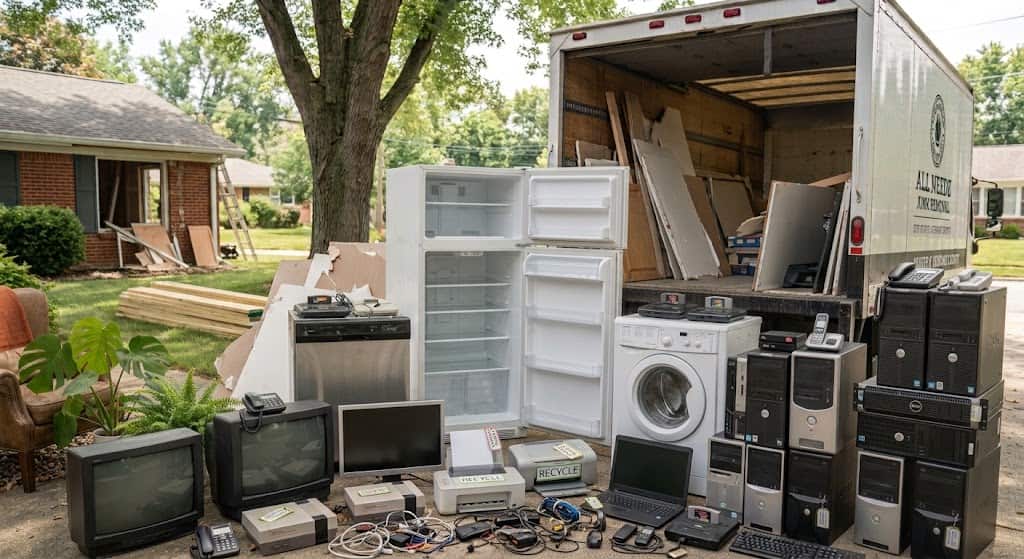
• Common appliance removal requests include refrigerators, freezers, washers, dryers, dishwashers, ovens, ranges, microwaves, window air conditioners, water heaters, and small kitchen appliances.
• Common e-waste removal requests include televisions, desktop computers, monitors, laptops, printers, scanners, routers, speakers, gaming equipment, phones, keyboards, cables, and other outdated devices.
Acceptance can depend on an item’s condition, size, contents, and local processing options. Tell your removal provider exactly what you have when requesting an estimate, especially if the load includes refrigerant-containing appliances, damaged batteries, unusually large equipment, or business electronics.
What may be recycled or reused
An item does not need to be brand-new to have value. A working appliance may be suitable for donation or reuse if an organization accepts that model and condition. Nonworking appliances may contain steel, aluminum, copper, and other recoverable materials. Electronics can contain metals, circuit boards, glass, and plastics that specialized processors may separate.
Recycling is not automatic, and not every facility accepts every device. Screens, batteries, refrigerants, and mixed-material products often have different requirements. A responsible hauler should assess practical recycling or donation options without promising to avoid disposal for every item. The best destination depends on condition and the receiving facility’s current rules.
How to prepare appliances before pickup
1. Empty the appliance. Remove food, liquids, dishes, lint, and personal belongings. Defrost freezers in advance and wipe up water so you can move the item safely.
2. Disconnect utilities safely. Unplug ordinary electrical items when it is safe to do so. A qualified person should disconnect gas lines, hardwired connections, water lines, and refrigerant systems when needed. Do not cut cords or release refrigerant.
3. Clear the route. Measure tight doorways when necessary, remove small obstacles, secure pets, and reserve building access. Tell the crew about stairs, elevators, gates, or tight turns before they arrive.
4. Keep hazardous materials separate. Do not leave chemicals, fuel, propane cylinders, loose batteries, or unknown liquids inside an appliance. Ask how these items should be handled rather than placing them in the general load.
Protect your information before electronics leave
Computers, phones, tablets, printers, and external drives may contain account details, photos, customer records, saved passwords, or other sensitive data. Junk removal clears the physical item; it should not be treated as a data-destruction service unless that service is specifically confirmed.
• Back up files you want to keep, then sign out of accounts and perform the manufacturer’s recommended reset or secure-erasure process.
• Remove SIM cards, memory cards, removable drives, paper originals, and labels that contain private information.
• Businesses should follow their written data-retention and destruction policies. Use a qualified data-destruction provider when required by contract, regulation, or internal policy.
Why professional removal helps
Large appliances and older televisions can be awkward, top-heavy, or difficult to grip. Moving them without the right equipment can damage walls, flooring, doorframes, vehicles, or nearby items. A professional crew can plan the path, handle the lifting, consolidate multiple items in one pickup, and take the load to appropriate destinations based on what is accepted.
This is especially useful during a move, renovation, estate cleanout, office upgrade, or property turnover. Instead of making several trips with different items, customers can point out what needs to go and reclaim space at once.
A practical plan for your September cleanout
Start with one room, garage bay, storage area, or office. Make three groups: items that still work, items that no longer work, and items that may contain personal data or hazardous components. Photograph the pile for an estimate, note any access challenges, and ask what the removal team can accept.
If old appliances or electronics are taking up space, contact All Needz Junk Removal at 817-513-6910. Share photos and details about the items, location, stairs, and access so the team can help you plan appliance and e-waste removal in Fort Worth and the surrounding DFW area.