
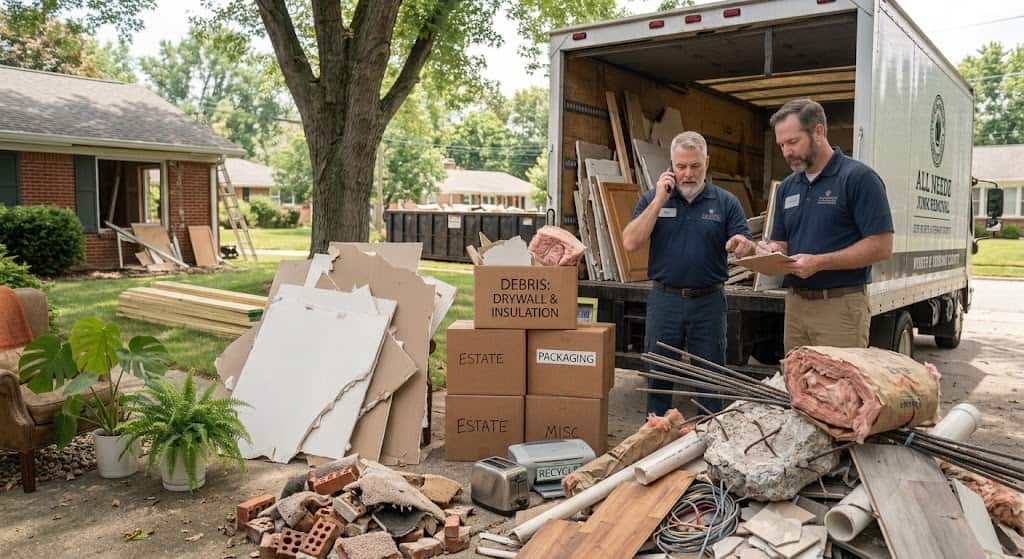
A home renovation can improve the way a property looks and functions, but it can also produce a surprising amount of debris. Old cabinets, flooring, trim, drywall, packaging, fixtures, and damaged materials can quickly fill a garage, driveway, or work area. When debris accumulates, it creates obstacles for the people completing the project and makes the property harder to use.
Planning construction debris removal before work begins keeps the project safer and more organized. Homeowners and contractors in Fort Worth and Tarrant County should identify the expected materials, confirm what a removal provider accepts, and schedule hauling at logical stages of the renovation.
Plan for Debris Before Demolition Begins
Make the cleanup plan part of the renovation schedule, not an afterthought. Ask the contractor or project lead which materials will be removed, who will haul them, and where debris may be stored temporarily. Confirm any neighborhood, property management, or homeowners association rules affecting containers, parking, work hours, or debris placement.
Estimate debris volume by project phase. A bathroom renovation may generate old fixtures, tile, cabinetry, and packaging. A flooring project may produce carpet, padding, boards, or tile. A larger remodel may involve several kinds of material that cannot all be handled the same way.
Separate Materials as the Project Progresses
A single mixed pile can hide sharp objects and make removal more difficult. Create designated areas for material categories when space and safety allow. Ask the hauling provider how to prepare items and whether any material must be handled separately.
• Wood, trim, cabinets, doors, and other dismantled building components.
• Drywall, tile, flooring, carpet, and similar renovation material.
• Plumbing fixtures, appliances, and other bulky household items.
• Clean cardboard and packaging that may qualify for recycling.
• Paint, solvents, fuel, batteries, chemicals, and unknown substances requiring specialized guidance.
Do not place hazardous or unknown materials into an ordinary construction debris pile. Contact the proper local program or qualified specialist for handling instructions.
Maintain a Safe Work Area
Construction debris may contain nails, screws, sharp edges, broken glass, splintered wood, and fine dust. Wear suitable footwear, gloves, and eye protection. Keep children, pets, customers, and anyone not involved in the project away from the work area.
Do not stack debris where it blocks doors, stairs, sidewalks, driveways, utility access, or emergency exits. Avoid piles that could shift or collapse. Keep heavy materials in stable locations that can support their weight and remain accessible to the removal crew.
Know When the Project Needs Specialized Help
Junk removal helps haul approved materials, but it does not replace licensed demolition, asbestos or lead remediation, mold treatment, electrical work, plumbing disconnection, structural evaluation, or hazardous material cleanup. If the project may involve regulated or dangerous materials, stop and consult the appropriate qualified professional before work continues.
Large concrete loads, soil, roofing materials, tree work, and unusually heavy construction components may also require specific equipment or a different type of provider. Describe the materials accurately and share photos before scheduling pickup.
Schedule Cleanup at the Right Stages
Waiting until the entire renovation is complete can leave the property crowded for days or weeks. For larger projects, staged removal can keep work areas accessible and prevent one debris pile from interfering with the next phase.
1. Arrange an initial pickup after demolition when the largest volume of old material has been removed.
2. Schedule another removal before new cabinets, fixtures, flooring, or appliances are delivered if space is limited.
3. Collect packaging and installation waste as the new materials are added.
4. Complete a final debris removal before detailed cleaning, inspection, or photography.
Prepare for Professional Construction Debris Removal
Before the appointment, photograph the debris from several angles and note its location. Mention stairs, gates, elevators, narrow hallways, soft ground, parking limitations, or other access concerns. Keep approved debris separate from tools, materials, and fixtures that must remain.
All Needz Junk Removal offers construction debris and bulky item removal throughout Fort Worth, North Richland Hills, and surrounding Tarrant County communities. The team can review project photos, confirm whether the materials are within scope, and provide an upfront price after inspection.
Finish the Renovation with a Clear Property
The renovation isn’t truly complete while discarded materials still occupy the property. A planned cleanup protects usable space, supports the work schedule, and makes the finished improvements easier to appreciate.
For construction debris removal in Fort Worth and Tarrant County, call All Needz Junk Removal at 817-513-6910 or send photos of the materials to request a free estimate.